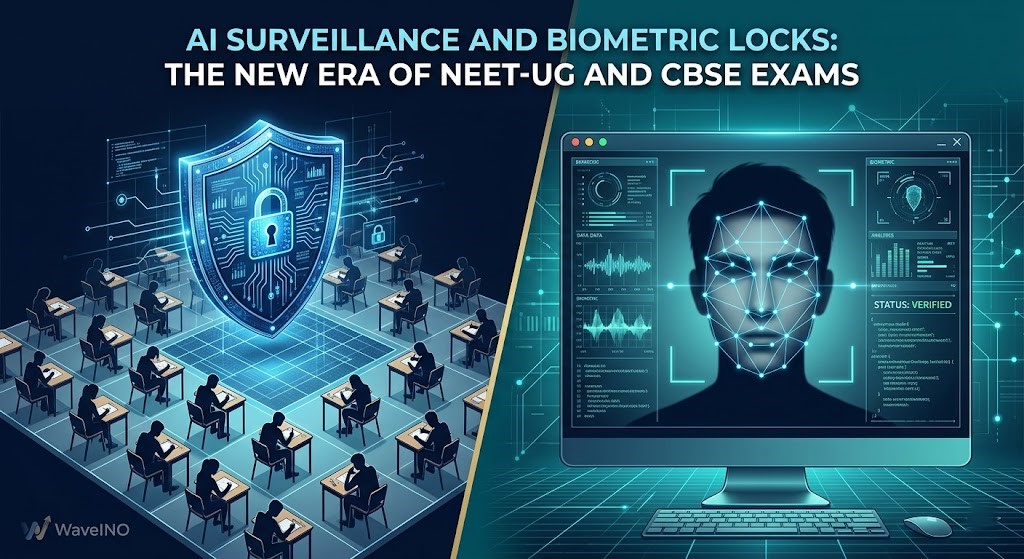
Historically, CCTV cameras installed across examination centers served a purely passive purpose. The video footage was recorded locally on physical hard drives and reviewed only if a major cheating complaint or anomaly was flagged days after the test concluded.
The current operational framework replaces this slow, post-event review process with live, centralized monitoring networks. For instance, the expansion of the CBSE Netra portal and parallel NTA command hubs connect thousands of examination halls across the country directly to centralized state and national dashboards.
These streams do not rely on human eyes to spot anomalies. Advanced computer vision and AI behavioral algorithms scan the rooms in real-time, instantly flagging specific, high-risk physical movements:
Abnormal Head Movements: Frequent, synchronized turning of heads or leaning beyond defined desks.
Prohibited Objects: Automatically detecting mobile screens, smartwatches, or unauthorized micro-slips hidden under stationery.
Crowd Clustering: Identifying unusual movement or group assembly around a single desk or invigilator station during testing hours.
When an anomaly is caught by the system, it triggers an instant notification on the local center superintendent's tablet, allowing staff to intercept malpractice before it spreads.
Bulletproofing Logistics: Encrypted Tracking and Geotagged Vaults
The primary vulnerability of any high-pressure paper exam does not usually exist inside the hall itself; it lies in the logistical pipeline—the transport of question booklets from central printing houses to bank vaults, and eventually to local centers.
To secure this pipeline, national boards have introduced full-stack digital asset tracking. Question papers are transported inside rugged, specialized storage cases outfitted with smart biometric and digital locks.
+-----------------------------------------------------------------+
|             HIGH-STAKES EXAM LOGISTICAL SECURITY MATRIX         |
+------------------------------+----------------------------------+
| Transport Container Lock     | Dual Biometric / Remote OTP Gate |
| Telemetry Tracking           | Real-time GPS & Geofencing       |
| Access Authorization Window  | Single-use time-locked code      |
| Verification Gateway         | Automated Fingerprint & Iris Scan|
+------------------------------+----------------------------------+
These smart locks cannot be opened manually by a driver or transit official. They utilize a time-locked, geofenced system that stays completely bricked until the container reaches the exact latitude and longitude of the pre-approved storage bank or school center.
Once the location is verified by built-in GPS trackers, a secure, single-use one-time password (OTP) is generated from the central command room in New Delhi and sent directly to the local administrator's device. This strict digital barrier ensures that unauthorized early access to physical papers is virtually impossible.
Eradicating Impersonation with Multi-Layered Biometrics
Impersonation—where a highly qualified proxy candidate takes the test on behalf of an applicant—remains a persistent threat for elite entrance exams like NEET-UG. Traditional hall tickets with standard passport photographs are vulnerable to digital manipulation and physical forgery.
To completely crush this bypass loop, entrance gates now utilize multi-layered biometric candidate verification hubs. As students enter the outer perimeter of the center, they must pass through automated verification checkpoints:
    [ Digital Admit Card Scan ]
                │
                ▼
    [ Real-Time Facial Matching ]
                │
                ▼
    [ Live Iris / Fingerprint Scan ]
                │
                ▼
    [ Final Access Ticket Issuance ]
The live biometric data captured at the entrance gate is instantly matched against the core database provided by the candidate during the initial application process months prior. By verifying that the exact identity matches at every single layer, testing agencies have successfully eliminated proxy cheating networks from the ecosystem.
Minimizing Human Bias and Errors
Beyond catching malicious actors, the evolution of CBSE and NEET-UG digital monitoring plays an equally vital role in reducing standard human administrative slip-ups.
Digital logging tools now track everything from the exact minute a question packet is opened in front of student witnesses to the automated scanning of completed OMR response sheets at regional collection depots. By automating the auditing process, testing boards ensure absolute compliance with standard operating guidelines, leaving zero room for local internal manipulation or administrative shortcuts.
For the millions of hard-working aspirants who spend years preparing for these defining exams, these strict digital guardrails offer well-deserved peace of mind. By replacing outdated human policing with a transparent, tech-first defense, India's educational boards are successfully building a highly credible ecosystem where true merit remains completely untainted.