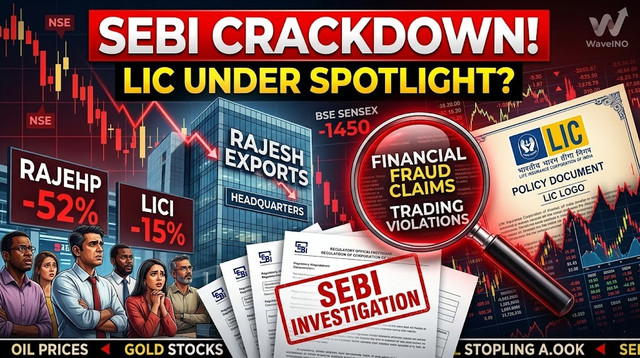
India's financial markets are closely watching developments surrounding Rajesh Exports after regulatory action by the Securities and Exchange Board of India (SEBI) brought the company under intense scrutiny. The case has not only raised questions about corporate governance and financial transparency but has also drawn attention to institutional investors with exposure to the company, including the Life Insurance Corporation of India (LIC).
The developments have become a major talking point among investors, analysts, and market observers who are assessing the potential implications for shareholder confidence and broader market sentiment.
Why the Case Is Drawing Attention
Regulatory investigations involving publicly listed companies often attract significant interest because they can influence investor confidence and perceptions of corporate governance standards. In the case of Rajesh Exports, the scrutiny has focused on alleged financial reporting concerns and related transactions that regulators are examining.
Whenever questions arise regarding the accuracy of financial disclosures, investors pay close attention because company valuations, investment decisions, and market trust depend heavily on reliable and transparent reporting.
The ongoing regulatory process is expected to determine the facts and establish whether any violations of securities regulations occurred.
LIC's Exposure Comes Under Focus
As one of India's largest institutional investors, LIC maintains investments across numerous listed companies. When a company facing regulatory scrutiny has institutional shareholders, market participants often examine the extent of such exposure and its potential implications.
Analysts note that institutional investors typically maintain diversified portfolios designed to manage risk across sectors and companies. Nevertheless, any major development involving a portfolio company can attract public attention and trigger discussions about investment oversight and risk management practices.
At present, investors are closely monitoring how the situation evolves and whether it could influence market perceptions regarding institutional holdings.
Impact on Investor Sentiment
Cases involving regulatory investigations can affect investor sentiment in several ways:
Increased Market Volatility
News related to investigations often leads to heightened trading activity and increased volatility as investors react to emerging developments.
Focus on Corporate Governance
The situation has renewed discussions about the importance of strong corporate governance practices, transparent financial reporting, and effective internal controls within listed companies.
Greater Demand for Transparency
Investors increasingly expect companies to maintain high standards of disclosure and accountability. Regulatory scrutiny often reinforces the importance of transparent communication between companies and shareholders.
The Role of SEBI
SEBI serves as India's primary securities market regulator and plays a critical role in maintaining market integrity. The regulator is responsible for monitoring listed companies, enforcing disclosure requirements, and protecting investor interests.
Regulatory investigations help ensure that markets operate fairly and transparently. They also act as a deterrent against potential misconduct by reinforcing compliance with securities laws and corporate governance standards.
Market experts emphasize that regulatory oversight is essential for sustaining long-term investor confidence and supporting healthy capital markets.
Corporate Governance Lessons for Investors
The developments surrounding Rajesh Exports have highlighted several important lessons for investors:
Review company disclosures regularly.
Evaluate corporate governance standards before investing.
Diversify investments to reduce concentration risk.
Monitor regulatory announcements and company filings.
Focus on long-term fundamentals rather than short-term market reactions.
These practices can help investors make informed decisions and better manage risk in changing market conditions.
Broader Implications for Financial Markets
Beyond the immediate impact on Rajesh Exports, the case has sparked broader conversations about transparency and accountability in India's corporate sector. Strong governance standards are widely viewed as essential for attracting domestic and international investment.
Market observers believe that continued regulatory vigilance can strengthen investor trust and contribute to the long-term development of India's financial markets.
Looking Ahead
The outcome of the regulatory process will be closely watched by investors, institutions, and market analysts. Future developments may provide greater clarity regarding the allegations, regulatory findings, and any potential consequences.
For now, the focus remains on the ongoing investigation and its implications for corporate governance, investor protection, and market confidence. As new information emerges, stakeholders across the financial ecosystem will continue to assess its significance and potential impact on India's capital markets.