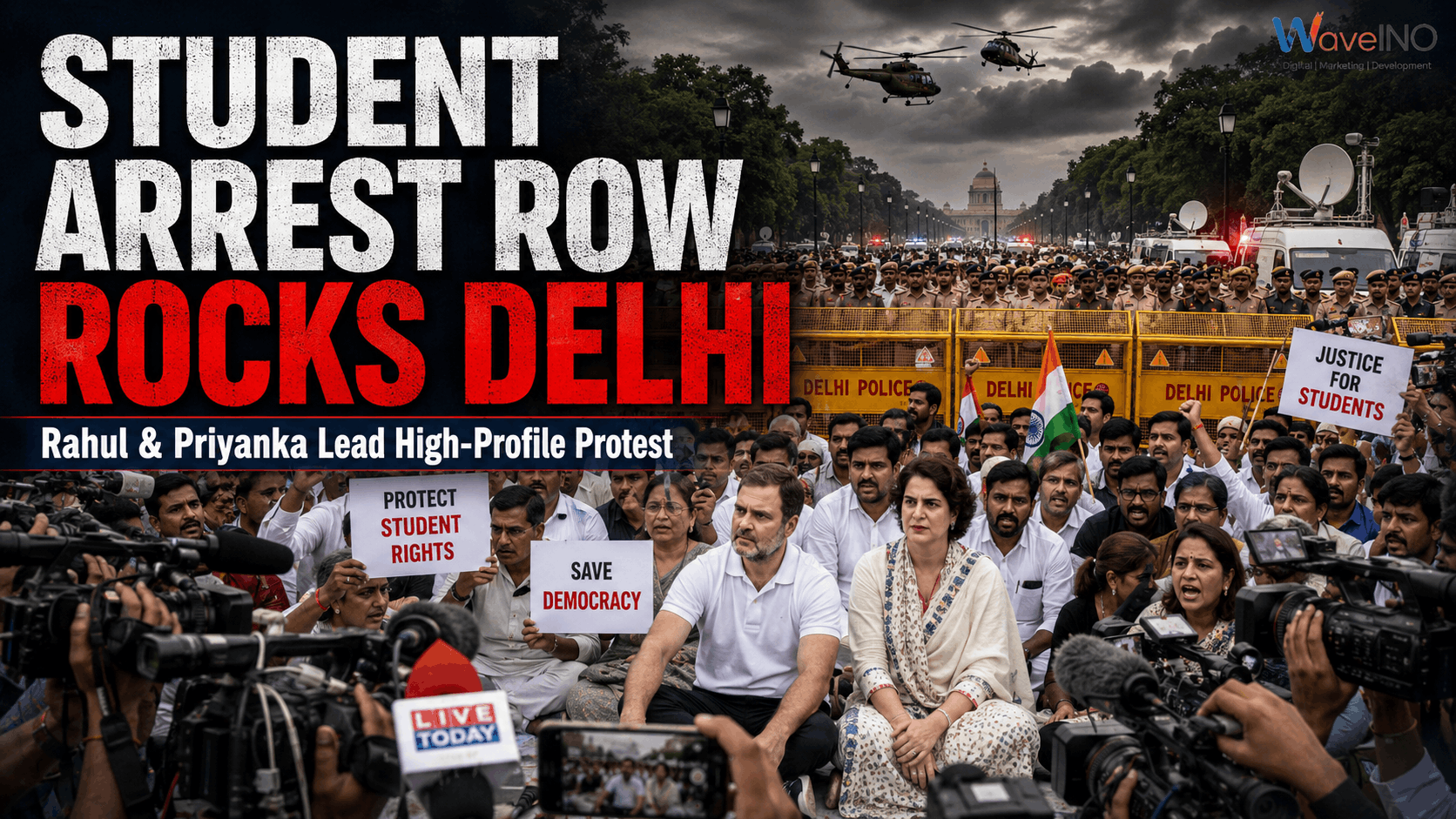
The political debate surrounding student arrests in the national capital intensified on Wednesday as senior Congress leaders Rahul Gandhi and Priyanka Gandhi Vadra led a sit-in demonstration near the Prime Minister's residence, transforming what began as a campus-related issue into a wider national political confrontation.
Rather than limiting its response to statements or parliamentary criticism, the Congress chose to take the issue directly to the streets, signaling that student rights and campus freedoms are likely to remain at the center of its political messaging.
From Campus Issue to National Debate
The protest focused on concerns surrounding the reported detention of students during recent demonstrations. Congress leaders argued that democratic dissent and peaceful student activism deserve protection and should not be met with excessive restrictions.
By organizing a high-profile sit-in in the heart of the national capital, the party sought to elevate the discussion beyond individual incidents and frame it as a broader question about civil liberties and democratic participation.
Youth Politics Returns to the Forefront
Political observers note that the demonstration reflects an increasing emphasis on issues affecting young voters, including education, employment, campus governance, and freedom of expression.
With university campuses frequently becoming centers of political debate, student movements have once again emerged as an influential force capable of shaping public discourse.
Congress appears to be positioning itself as a vocal supporter of student concerns, hoping the issue resonates with India's expanding youth electorate.
Government Yet to Respond in Detail
While opposition leaders criticized the handling of the situation, the government had not issued a detailed response addressing the specific allegations surrounding the reported student arrests at the time of writing.
Security arrangements remained tight in the protest area, and authorities monitored the demonstration to maintain public order.
Political Stakes Continue to Rise
The latest protest illustrates how education and campus-related developments are increasingly intersecting with national politics. What might once have remained a localized student issue is now influencing broader conversations about governance, democratic participation, and the relationship between citizens and the state.
As political parties continue to engage with youth-focused issues, similar demonstrations and debates are expected to remain part of India's evolving political landscape.
Looking Ahead
Whether the protest leads to policy discussions or further political confrontation remains to be seen. However, one message is clear: student rights have moved beyond university campuses and become an important part of India's national political conversation, with both the government and opposition expected to face increasing public scrutiny over how such issues are addressed.